Safe and Toxic Household Foods for Horses
Horse owners love spoiling their equine companions, and it’s tempting to share food from our own kitchens. After all, horses enjoy crunchy snacks and sweet treats just like we do. But not all human foods are safe for horses—some are toxic and can cause serious health issues.
Knowing what foods horses can eat safely and what foods are poisonous to horses is one of the most important parts of responsible horse ownership. Below, you’ll find a list of toxic foods to avoid and safe options you can feed in moderation, plus tips for keeping your horse healthy at mealtime.
Foods That Are Poisonous for Horses
- Chocolate
Similar to dogs, chocolate is dangerous for horses. It contains theobromine and caffeine, both of which are toxic to horses, even in small quantities. Their bodies cannot metabolize these compounds effectively, leading to restlessness, colic, irregular heartbeat, seizures, and even death in severe cases. Dark chocolate, with higher theobromine levels, is especially harmful.
- Avocado
The avocado fruit itself isn’t necessarily toxic for the horses, but the pit, skin, and leaves of the plant are, as they contain a persin, a fungicidal toxin. While the flesh of the fruit is less harmful, it’s not worth the risk. In horses, ingestion may cause colic, breathing difficulty, or swelling of the head and neck.
- Dairy Products
Unlike humans, adult horses do not produce enough lactase, the enzyme needed to digest lactose in milk and dairy products. Feeding yogurt, cheese, or milk can cause diarrhea, bloating, and digestive upset. Over time, it may even increase the risk of colic. Horses benefit more from equine-specific probiotics if gut health support is needed.
- Moldy Grass or Hay
Horses rely on hay and forage for most of their diet, but if the feed becomes moldy, it can turn dangerous. Moldy hay may contain mycotoxins, which damage the lungs and digestive system. Inhaling spores can lead to respiratory illness such as heaves (similar to asthma in humans). Eating moldy hay may also trigger colic. Always inspect hay for musty smells, dark spots, or dust before feeding.
- Nightshades: Tomatoes, Peppers, and Eggplants
Plants in the nightshade family (tomatoes, eggplants, peppers) contain solanine, a glycoalkaloid toxin that interferes with the nervous and digestive systems of horses. It may cause colic, diarrhea, dilated pupils, or an irregular heartbeat..
- Potatoes
Raw or sprouted potatoes are especially dangerous for horses because they contain solanine and chaconine, both of which are toxic. Signs of poisoning include drowsiness, weakness, difficulty breathing, and colic. Cooking reduces toxins, but feeding potatoes to horses is never recommended. If you compost potato peels, make sure your horse can’t access the pile.
- Other Animal Feed Not Made for Horses
It may be tempting to share livestock feed between species, but horse digestion is unique. Dog food, chicken feed, or pig feed often contains animal proteins, medications, or minerals that are harmful to horses. Horses should only be fed formulated horse feed and forage, as their digestive systems are highly specialized.
Household Foods That Horses Can Eat Safely
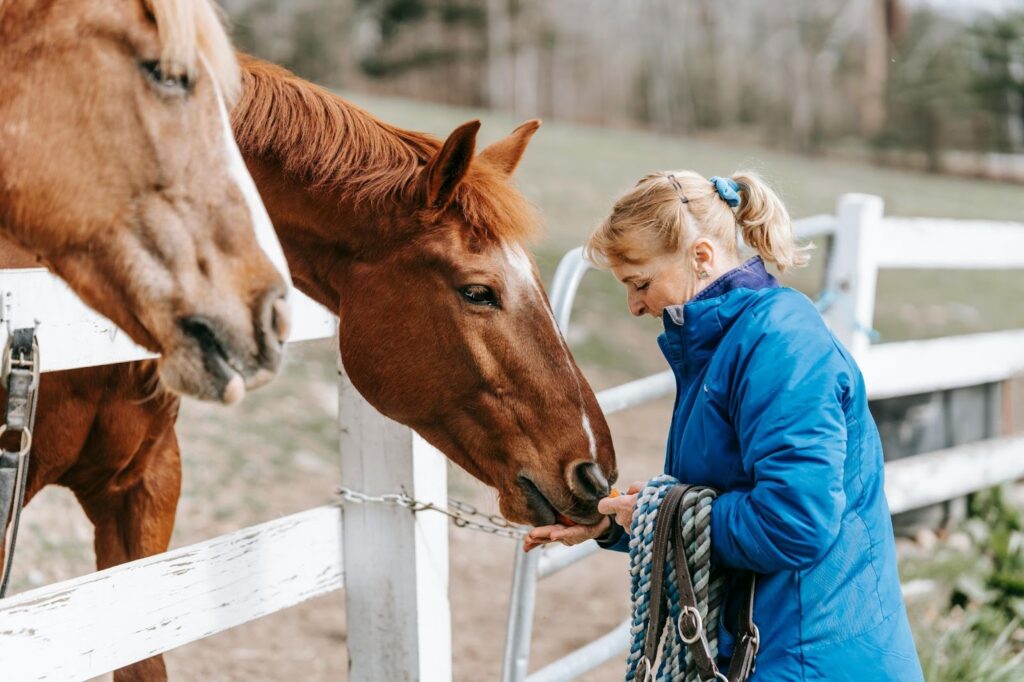
- Apples
Apples are high in fiber and water, making them a refreshing treat. However, apple seeds contain small amounts of cyanide compounds, so the core and seeds should always be removed. Horses also enjoy plain applesauce as a fun alternative. Limit apples to 1–2 per day, especially for horses prone to insulin resistance.
- Bananas
Yes, horses can eat bananas. They’re rich in potassium, vitamin B6, and fiber, which can support muscle function and energy. Some owners even use bananas to hide pills or supplements. Because bananas are high in sugar, feed only as an occasional snack—half to one banana at a time is plenty.
- Celery
Celery is a low-calorie, high-water vegetable that makes a healthy treat. It’s also packed with fiber and vitamin K. Horses usually enjoy its crunch, especially on hot days when hydration is key. Chop celery into small pieces to prevent choking and make it easier to chew.
- Peanut Butter
Many horses love the rich taste of peanut butter. It’s safe as long as you choose a natural peanut butter with no added sugar, salt, or xylitol (an artificial sweetener that is deadly for pets). It can also be useful for disguising medication. Feed in small amounts—a spoonful is more than enough.
- Sugar Cubes
Sugar cubes have been a horse treat for generations, but they’re not the healthiest option. While safe in tiny amounts, excess sugar can lead to weight gain or worsen conditions like equine metabolic syndrome or Cushing’s disease. Stick to one or two sugar cubes as a special reward, not a daily snack.
How to Safely Feed Treats to Your Horse
Even safe foods should be given with care. Keep these guidelines in mind when sharing snacks with your horse:
- Treats should make up less than 10% of the diet.
- Cut foods into small, manageable pieces to prevent choking.
- Horses have sensitive digestive systems; add new foods gradually.
- Watch for signs of colic, diarrhea, or discomfort after feeding new treats.
- Forage and formulated horse feed should always be the main diet.
Join Our Pet Health Community
Horse owners and pet parents like you are shaping the future of veterinary care. Be the first to hear about regenerative medicine, clinical research, and tips for keeping your animals thriving.