What to Do in the First 2 Hours After Finding a Hot Spot on Your Dog
Uh-oh…you’ve just found a hot spot on your cat or dog. Hot spots, also called acute moist dermatitis, are extremely common skin lesions caused by irritation, moisture, allergies, bites, or overgrooming. While most hot spots aren’t true emergencies, they can be painful and itchy, and they can worsen quickly if not treated early. They can also be the first sign of an underlying issue such as allergies, parasites, or skin infections.
Here’s what pet owners should do during the first two hours after discovering a hot spot, and how to tell when it’s time to call a veterinarian.
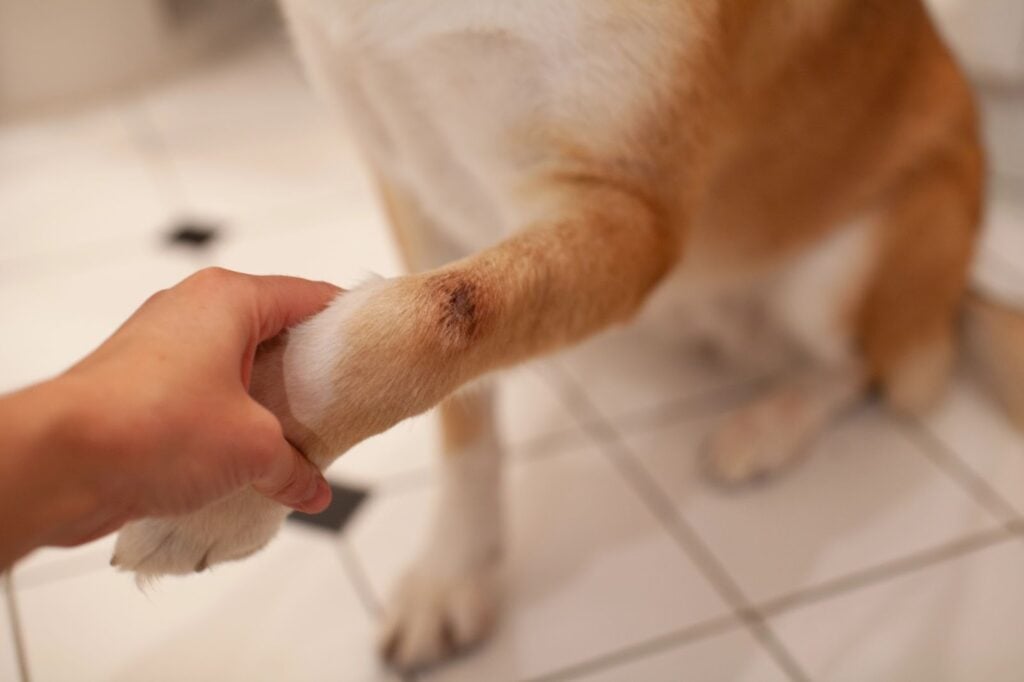
Early Signs of Hot Spots on Pets
Hot spots often develop in areas where moisture gets trapped or where pets lick, chew, and scratch, such as:
- under the tail
- between the toes
- around the ears
- under the collar
- along the thighs or flanks
Because pets are experts at hiding discomfort, these spots may go unnoticed for days. When you first find one, take a moment to gently examine it.
Make note of:
- size and shape of the lesion
- redness or swelling
- moisture, odor, or discharge
- whether the skin is raw, painful, or bleeding
- whether your pet reacts when you touch the area
Taking a quick photo is helpful so you can compare later and track whether the spot is improving or worsening. This also helps your veterinarian evaluate the progression if you need to send it in for review.
Hot Spot Treatment for Pets
Most mild hot spots can be treated at home, but only if they are not severely infected. Understanding the cause can also help prevent new spots from forming. Common triggers include:
- recent swimming or bathing (moisture trapped in fur)
- insect bites or flea allergies
- food or environmental allergies
- matted fur
- stress or compulsive licking
- small cuts or abrasions
- warm, humid weather
If the hot spot looks mild:
Gently trim away surrounding fur (if you’re comfortable), so air can reach the skin and prevent bacteria from multiplying in a warm, damp environment.
Next:
- Clean the area with a pet-safe antiseptic cleanser such as chlorhexidine.
- Let it sit for about 10 minutes, then rinse with clean water.
- Pat the area completely dry.
- Apply a thin layer of a topical hot spot spray or ointment recommended for pets.
- Prevent licking or chewing with a cone, inflatable collar, or T-shirt.
Avoid thick ointments that trap moisture. If you use a small amount of over-the-counter antibiotic ointment like Neosporin, wipe away any excess after 10 minutes so your pet doesn’t ingest it.
Monitor the spot over the next 24-48 hours. Many hot spots improve quickly once kept clean, dry, and protected from licking.
Decide Whether a Vet Visit Is Needed
Most hot spots calm down within a day or two when cleaned and protected, but some truly need veterinary care, and it’s better to know early when to make that call.
If the area looks very swollen, has a strong odor, or is producing thick discharge, those are signs the inflammation has progressed to infection. Hot spots that have spread rapidly or seem extremely painful when touched also usually need prescription-strength treatment. And if your dog has never had a hot spot before, it’s not a bad idea to check in with your veterinarian so you can rule out underlying causes like allergies, parasites, or skin infections.
Dogs who get recurring hot spots (the ones who develop a new one every summer or after every bath) almost always have a root cause worth exploring. Common culprits include:
- flea allergy dermatitis
- seasonal or environmental allergies
- food sensitivities
- ear infections (a big trigger in floppy-eared dogs)
- mites or skin infections
- anxiety or stress-related licking
- pain in a specific area
Once those triggers are identified and managed, many pets stop developing hot spots altogether.
At Gallant, we’re working on developing ready-to-use, off-the-shelf stem cell therapies. These therapies are being studied for their potential to support pets facing age-related conditions, chronic inflammation, or degenerative diseases. While more research is ongoing, regenerative medicine offers hope for new treatment options that may improve the quality of life for pets in the future.
A Step Forward in Veterinary Care
Get the latest news on stem cell research, clinical trials, and the future of pet care.