Stem Cells 101: What is A Mesenchymal Stem/Stromal Cell?
Understanding Stem Cell Differentiation
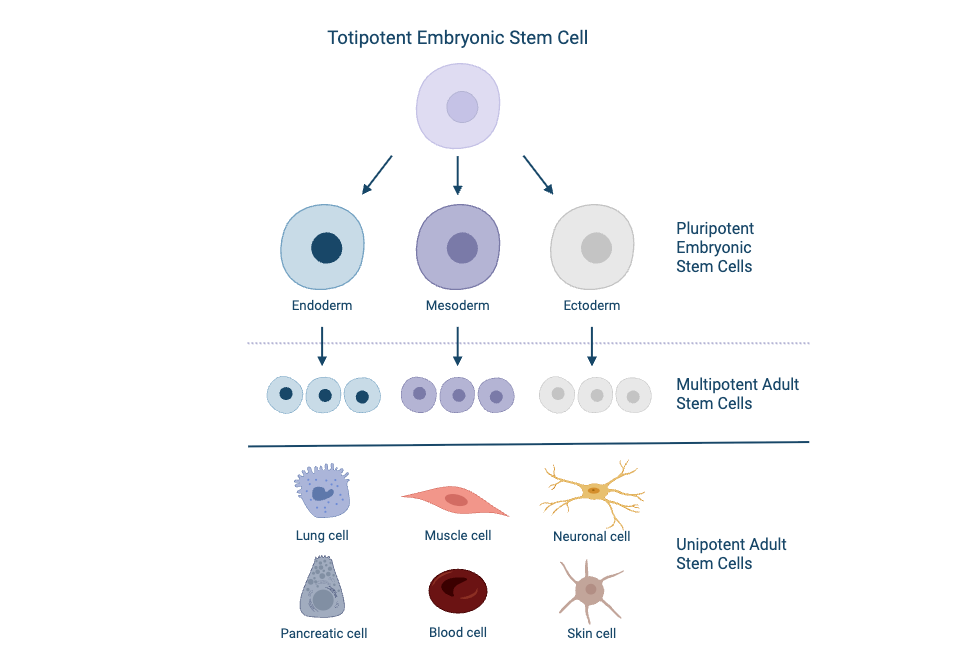
Stem cells are classified based on their differentiation potential, or their ability to develop into different cell types. There are four main categories representing a differentiation spectrum from the most versatile to the most restricted: totipotent, pluripotent, multipotent, and unipotent.
Totipotent stem cells can give rise to all cell types in the body and extraembryonic tissues (such as the placenta). They naturally occur only during the earliest stages of embryonic development (zygote and early blastocyst stage).
Pluripotent cells can differentiate into any cell type of the three germ layers: ectoderm, mesoderm, and endoderm, but not extraembryonic tissues. Embryonic stem cells are examples of pluripotent stem cells. Pluripotent stem cells can also be created from other stem cells (called induced pluripotent stem cells). Multipotent stem cells are adult (or somatic) stem cells that can differentiate into multiple cell types within a specific lineage or germ layer (endoderm, mesoderm, ectoderm). Unlike totipotent and pluripotent stem cells, multipotent stem cells do not have the capacity to generate all cell types, but they retain self-renewal ability and are crucial for tissue maintenance, repair, and regeneration.
What Are Mesenchymal Stem (Stromal) Cells?
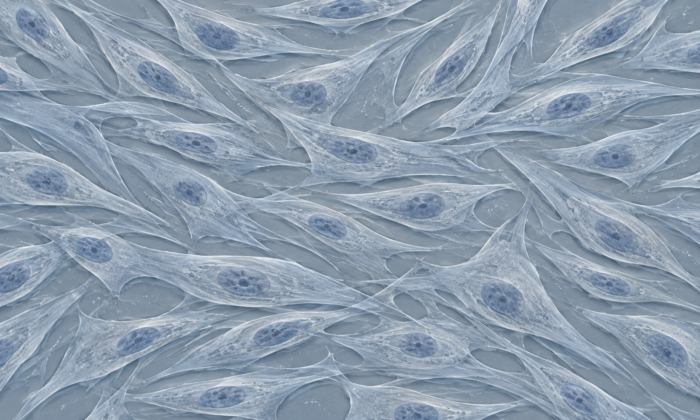
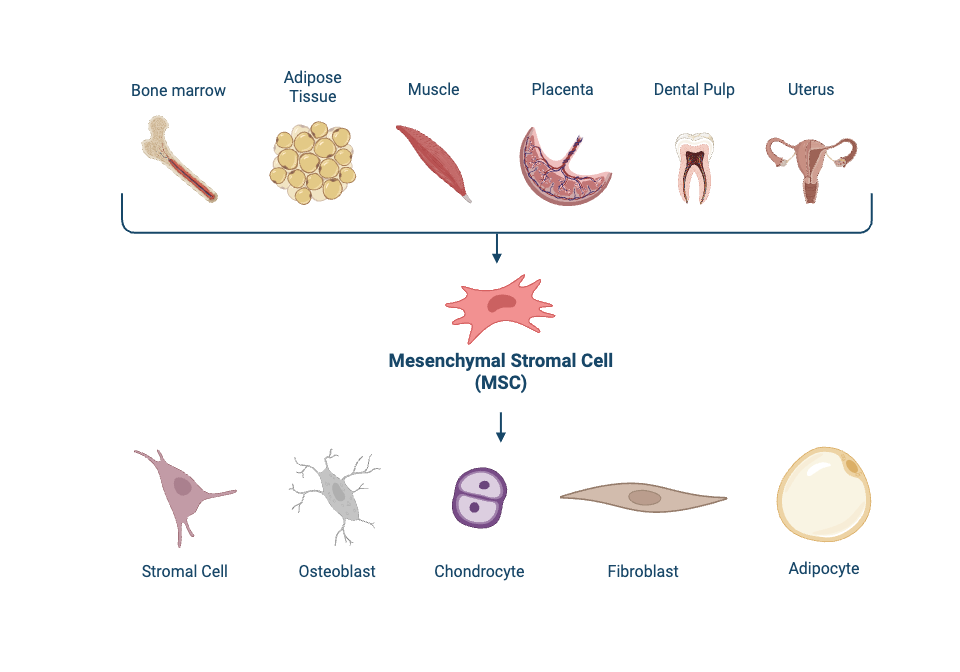
Examples of multipotent stem cells include hematopoietic stem cells (which give rise to all blood cells) and mesenchymal stem cells, more appropriately termed mesenchymal “stromal” cells (also MSCs), given their limited ability to form new cell types compared to pluripotent and totipotent stem cells. MSCs can differentiate into various mesodermal cell types, including osteoblasts (bone cells), chondrocytes (cartilage cells), and adipocytes (fat cells). Under appropriate development conditions, MSCs can also form hepatocellular (liver) cells, neurons and astrocytes, pancreatic cells, and cardiac muscle cells.1
Sources of MSCs
Sources of mesenchymal stem cells include bone marrow, fat, placenta, synovium, dental pulp, and uterus.
Unipotent stem cells produce only one specific cell type but retain the property of self-renewal. Examples of unipotent stem cells include epidermal stem cells (which produce skin).
Stem Cells and the FDA
Stem cells have been called a biologic, a tissue transplant, and a drug to designate their medical use. Stem cells are considered by the Food and Drug Administration Center for Veterinary Medicine to be a drug because they are intended to affect the structure or function of the body. Stem cell nomenclature helps define their ability to differentiate; for example, embryonic stem cells and adult stem cells behave differently.2
How do MSCs work?
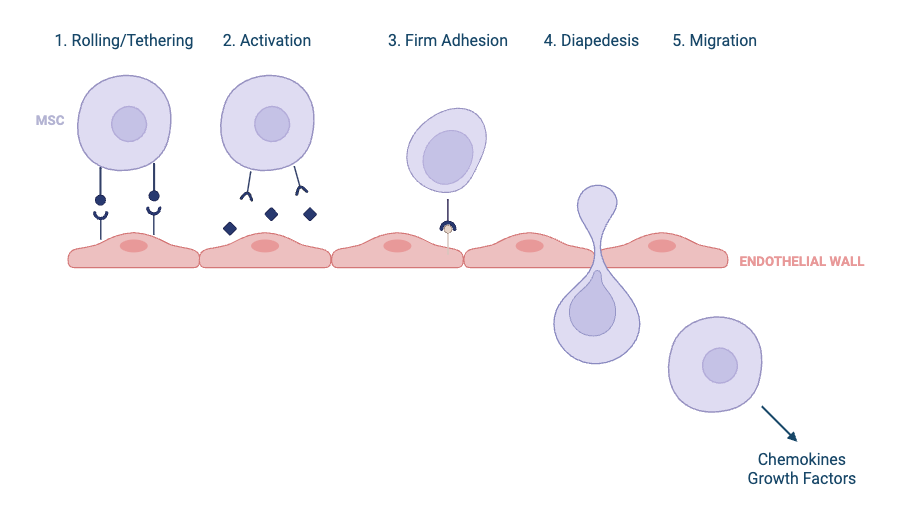
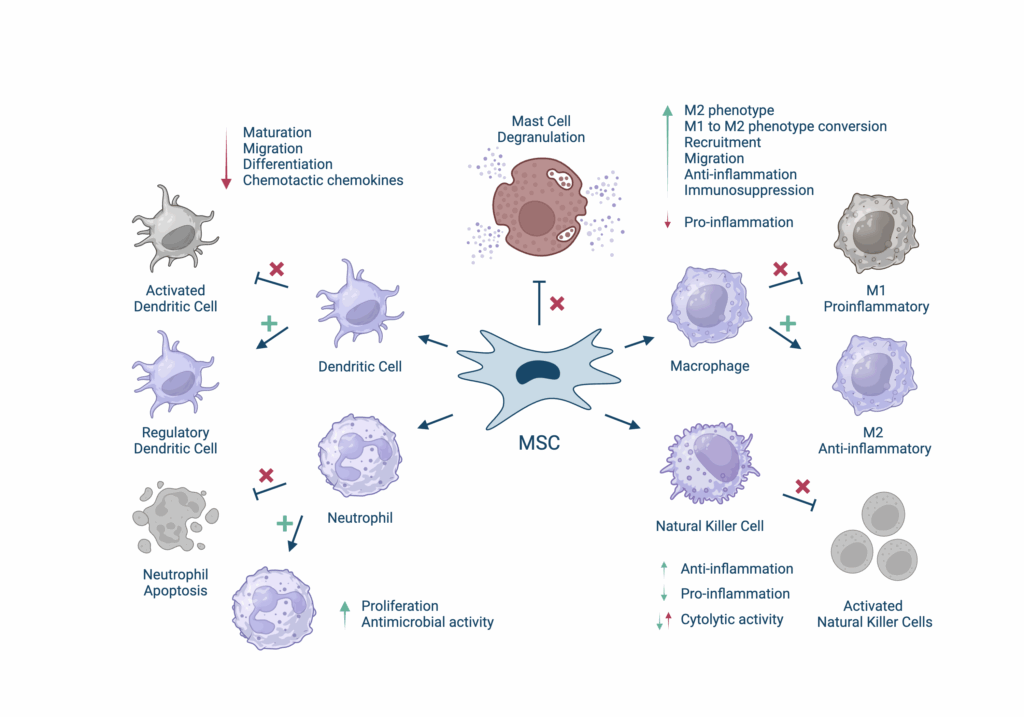
MSCs possess significant immunomodulatory and anti-inflammatory properties, which are largely mediated by paracrine signaling. They influence both innate and adaptive immune responses, making them attractive candidates for therapeutic use in inflammatory and autoimmune diseases. In most conditions, they influence cytokine profiles and white blood cell activity to be less pro-inflammatory and more anti-inflammatory, thereby resetting the immune imbalance.
It has been well established that when given intravenously, MSCs “home” to sites of inflammation and immune dysregulation but do not set up residence in the tissues.3–5 Because MSCs have limited differentiation capacity and a low engraftment rate, the cells are not retained in the tissues long-term and therefore unlikely to induce tumorigenicity. MSCs move to areas of injury and release numerous immunoregulatory and trophic signals to modulate disease at a molecular level. MSCs can transfer mitochondria to neighboring injured cells to promote healing. MSCs release extracellular vesicles that help reset and maintain the body’s immune response, homeostasis, and normal biological function.
In addition to their anti-inflammatory and immunomodulatory properties, MSCs have disease-modifying capability, allowing them to work naturally to restore tissue health. This property makes stem cells unique from some other therapies in the regenerative medicine category.
References
- Gopalarethinam J, Nair AP, Iyer M, Vellingiri B, Subramaniam MD. Advantages of mesenchymal stem cell over the other stem cells. Acta Histochem. 2023;125(4):152041. doi:10.1016/j.acthis.2023.152041
- Zakrzewski W, Dobrzyński M, Szymonowicz M, Rybak Z. Stem cells: past, present, and future. Stem Cell Res Ther. 2019;10(1):68. doi:10.1186/s13287-019-1165-5
- Karp JM, Leng Teo GS. Mesenchymal Stem Cell Homing: The Devil Is in the Details. Cell Stem Cell. 2009;4(3):206-216. doi:10.1016/j.stem.2009.02.001
- Beerts C, Pauwelyn G, Depuydt E, et al. Homing of radiolabelled xenogeneic equine peripheral blood-derived MSCs towards a joint lesion in a dog. Front Vet Sci. 2022;9:1035175. doi:10.3389/fvets.2022.1035175
- Beerts C, Broeckx SY, Depuydt E, et al. Low-dose xenogeneic mesenchymal stem cells target canine osteoarthritis through systemic immunomodulation and homing. Arthritis Res Ther. 2023;25(1):190. doi:10.1186/s13075-023-03168-7

Vice President of Veterinary Affairs at Gallant
Dr. Rebecca Windsor, DVM, DACVIM, is a board-certified veterinary neurologist with over 20 years of clinical experience and a strong record of scientific publication. She joined Gallant in 2025 and serves as Vice President of Veterinary Affairs.
Dr. Windsor specializes in veterinary regenerative medicine, with a focus on advancing FDA-approved, off-the-shelf mesenchymal stem cell therapies for pets. She develops educational platforms that translate the science, safety, and clinical efficacy of stem cell therapy for veterinary professionals. Since 2019, she has served as a Clinician Scientist at Ethos Discovery, where she leads the neurology research portfolio.