Gallant’s 2025 Year in Review: FDA Progress, Clinical Impact, and Stem Cell Therapy Ready for Practice
A year of growth, evidence, and momentum as we move regenerative medicine closer to routine veterinary care—and the pets who need it.
A Refreshed Brand, Inspired by Connectedness
We started the year with a new look—but it’s more than that.
Our rebrand reflects something deeper: the belief that the well-being of animals, people, and the environment is interconnected. That’s the heart of regenerative medicine. And it’s at the heart of Gallant.
You’ll see it in the linework of our new logo—a nod to the networks inside the body, the ecosystem around us, and the body’s natural healing mechanisms we are harnessing to restore health at the source. What could be more connected to life than that? 💙
And from that launch point, the rest of the year took on its own momentum.
FDA Progress, Published Evidence, and Lives Changed
This year, we crossed two major FDA milestones for our lead therapy for refractory feline chronic gingivostomatitis (FCGS): the technical sections for safety and effectiveness are now complete. That puts us on track for potential conditional approval in early-mid 2026—and one step closer to delivering what could become the first FDA-approved, off-the-shelf stem cell therapy in veterinary medicine.
We also closed our Series B round led by Digitalis Ventures, with continued support from BOLD Capital and Hill Creek Partners, and a new partnership with NovaQuest, whose portfolio also includes the first FDA-approved human allogeneic stem cell therapy. Their investment isn’t just a vote of confidence in our product—it’s a belief in a future where regenerative medicine helps pets heal, not just cope.
Finally, we published the results of our pivotal field study, where our therapy showed a clear, measurable impact. Over 75% of treated cats improved in quality of life, and almost half saw meaningful healing in their mouths.
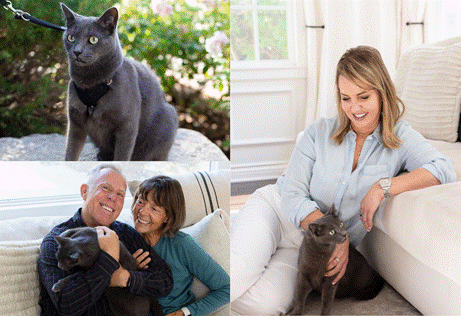
But behind those numbers are stories–like Robin’s.
When Robin entered the study, he had stopped eating and grooming. His family was hand-feeding him just to keep him going. After receiving stem cell therapy, Robin didn’t just improve—he went into remission. Today, he’s back to being himself: active, playful, and full of life.
We’re careful with the word miracle—but in Robin’s case, it felt close. And stories like his inspire us every day.
Leading What’s Next, Together
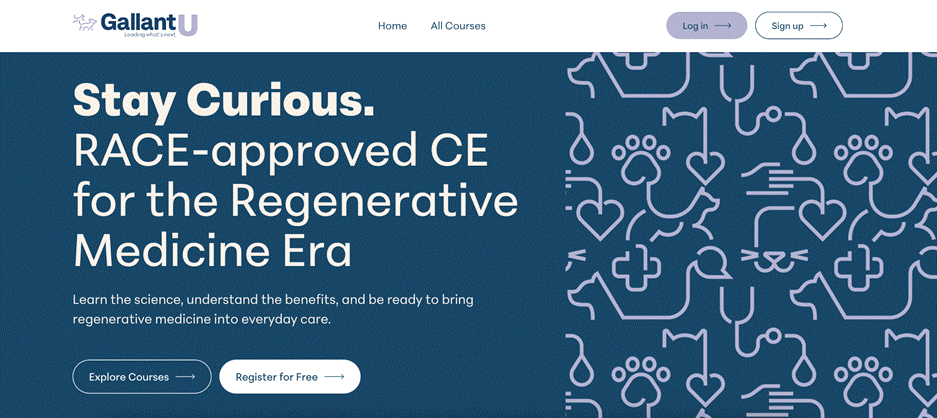
As we push science forward, we’re also working to ensure the veterinary community is equipped to lead this next chapter. That’s why this year, we launched GallantU, our continuing education platform on regenerative medicine, built for veterinary practitioners.
GallantU is more than a library of CE credits. It’s a place to learn, ask questions, and build confidence in a field that’s rapidly evolving. From stem cell biology to practical protocols, the courses are led by the people doing the work—board-certified clinicians, researchers, and regenerative medicine pioneers who’ve seen firsthand how these therapies can change lives.
And beyond our own platform, we were excited to see growing interest from the broader veterinary community.
All Cats Considered, the podcast from the Feline VMA, invited Dr. Rebecca Windsor to discuss how allogeneic stem cell therapies are changing care for FCGS, and in a dvm360 piece, she cleared up some common misconceptions and persistent myths around stem cells.
Dr. Linda Black sat down with the Veterinary Roundtable Podcast to talk about how ready-to-use therapies could finally shift the standard from symptom management to targeting disease at the source—and again with Veterinary Advantage for a Q&A on what it takes to bring a stem cell product through FDA review.
She also shared the big picture on The Woof, diving into how regenerative medicine could someday replace long-term prescriptions for chronic disease, and wrote for PetVet Magazine about what this new era of care means for clinics, clients, and the industry at large.
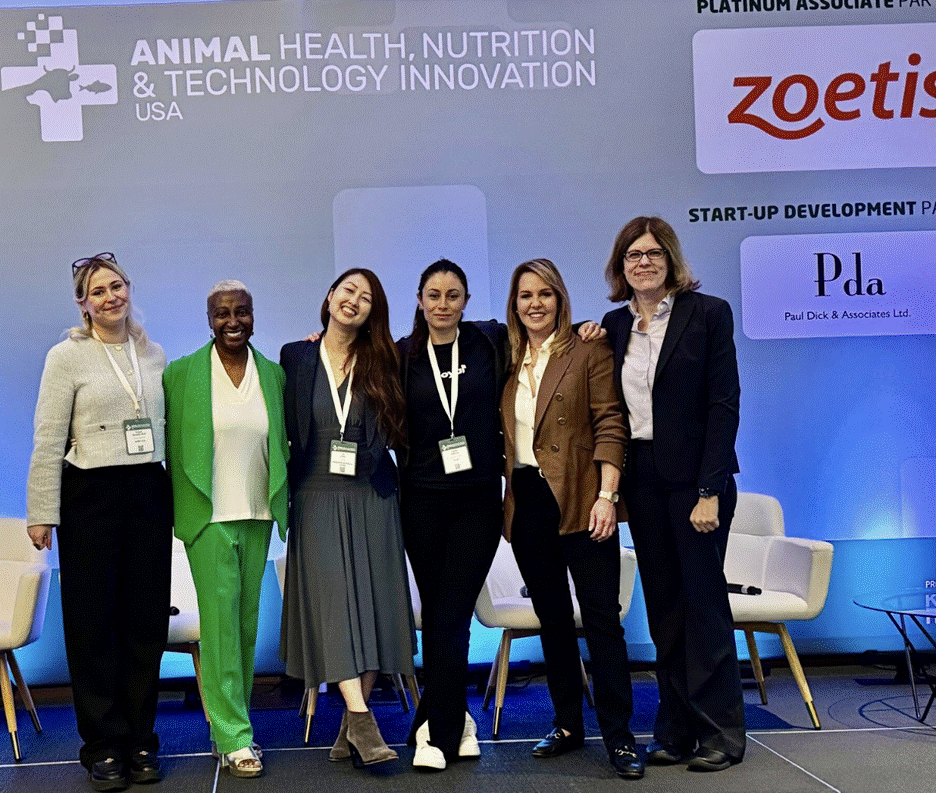
We’ve also shown up across the country this year to keep the conversation going—in conference halls, classrooms, and community events. From Animal Health & Nutrition Innovation to Fetch, Feline VMA, and the Veterinary Dental Forum, our team has been out there sharing what we’ve learned, listening to what veterinarians need, and helping to bring regenerative education to the forefront.
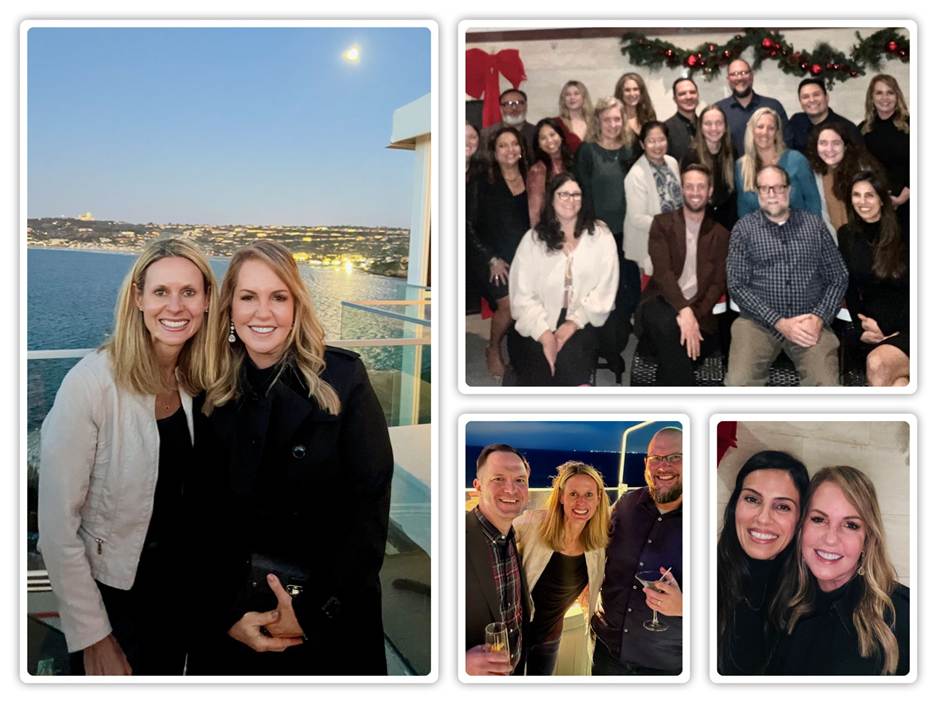
Behind the Science: Our Growing Team
This year, we added new voices—and new energy—to the work.
We welcomed Dr. Rebecca Windsor, a board-certified neurologist and now our Director of Veterinary Affairs, who can explain immune modulation without making your head spin—and make it sound exciting.
As we gear up for the commercial launch next year, we’ve strengthened our marketing team. Shane Fairchild joined as Director of Marketing, bringing nearly a decade in animal health and a sharp eye for what resonates. And on our board, biotech innovator Misti Ushio and veterinary leader Doug Drew brought the kind of perspective that helps turn pioneering science into practical care.
Our Biggest Chapter Yet
We’re not just entering a new year—we’re entering a new era.
Conditional FDA approval for our first product is within reach. That means more cats like Robin could get real relief. It means a new tool in the hands of veterinarians. It means we’re one step closer to every clinic having a vial of stem cell therapy in their freezer—ready when a pet needs it.
Thank you.
To the veterinary professionals who believe there’s a better way.
To the investors who backed bold science.
To the team who gave their all.
To the pet parents who never gave up.
Stay with us on the journey.
For updates, breakthroughs, and more stories from the front lines of regenerative medicine, sign up for our Stay Curious newsletter on LinkedIn or subscribe below.
Stay Curious.
Stay updated on the latest breakthroughs in regenerative medicine and stem cell therapies for pets.
✨ Follow Dr. Linda Black’s Substack: Stem Cells and Pets. Go behind the scenes at Gallant, meet the team, learn how ready-to-use stem cell therapies are made, and hear Linda’s reflections on science, leadership, and personal growth.
Here’s to 2026—the year of health, reclaimed!