Microchipping Pets: A Complete Guide for Pet Owners
Every domestic pet should be microchipped. Yes, we said it! Every single one. There are simply too many benefits and too few drawbacks of microchipping to ignore. For many pet owners, deciding whether to microchip a dog or cat raises questions about safety, effectiveness, and how the process works.
Microchips offer a permanent form of pet identification and play a critical role in helping lost pets reunite with their families. Still, many pet owners are unsure what a microchip actually does, whether it tracks location, or what to expect during implantation. This guide explains the basics.
What is a Pet Microchip?
A pet microchip is a tiny, non-reactive computer chip about the size of a single grain of rice. Each chip is programmed with a unique 15-digit identification number. Once implanted just beneath the skin, the microchip serves as a permanent ID, similar to an identification card that cannot be lost or removed like a collar or tag.
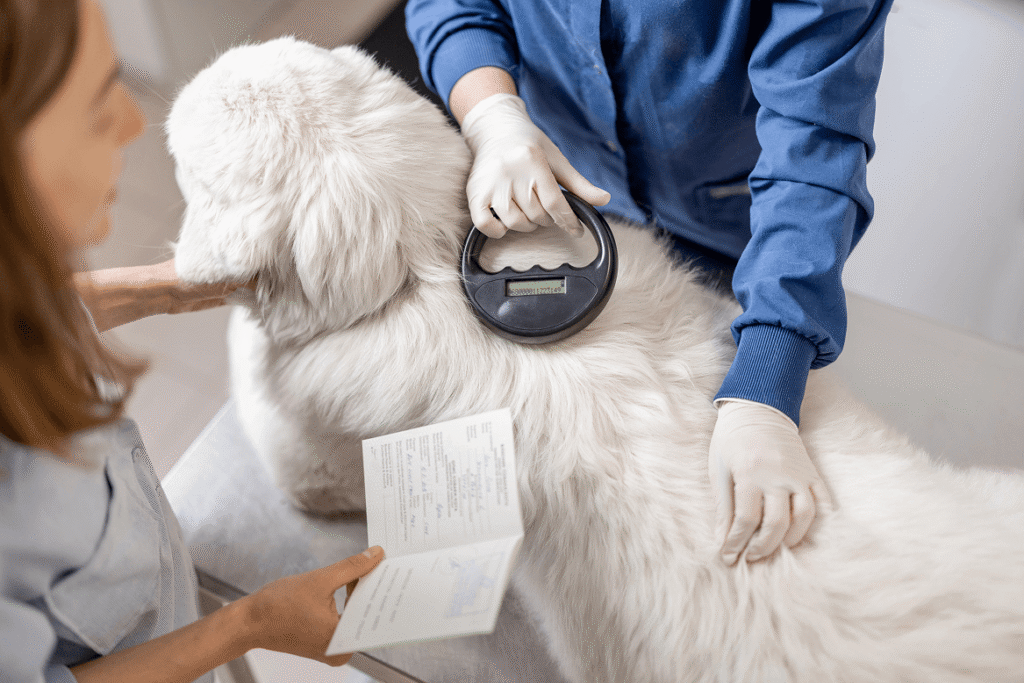
Does a Microchip Track My Pet’s Location?
This is the most common misconception about pet microchips, so let’s clear it up: No, microchips do NOT track your pet’s location. They are not GPS devices and cannot tell you where your pet is in real-time.
Instead, microchips use radio-frequency identification (RFID) technology. Think of a microchip like a barcode at a grocery store—it doesn’t do anything until someone scans it.
Here’s how it works:
- A microchip scanner (which vets, shelters, and animal control officers have) emits a low-frequency radio wave
- When passed over the microchip, this radio wave activates the chip
- The chip transmits its unique ID number back to the scanner
- The person scanning then looks up that ID number in a national pet microchip database
- If your registration is current, they find your contact information, your pet’s description, and any medical info.
Because a microchip isn’t constantly transmitting, it doesn’t need batteries or charging, and it never has to be replaced. But veterinarians often recommend checking the chip annually during routine exams and ensuring your contact information is kept up to date in the registry.
What Does a Microchip Actually Do?
Great question! A microchip doesn’t actively “do” anything on its own, but when your lost pet is found, it becomes a lifeline home.
The Lost Pet Recovery Process:
Step 1: Your pet goes missing (door left open, fence breach, scared by fireworks, etc.)
Step 2: A Good Samaritan finds your pet or she’s picked up by animal control
Step 3: They bring your pet to a veterinary clinic, animal shelter, or rescue organization
Step 4: The staff member scans your pet for a microchip (standard procedure at almost all facilities)
Step 5: The scanner displays your pet’s unique ID number
Step 6: They search for that ID number in the microchip registry database
Step 7: Your contact information appears along with your pet’s description and medical info
Step 8: You get the call: “We found your pet!”
Both dogs AND cats should be microchipped, although a lot of indoor cat owners assume there’s no need. In fact, pets who aren’t frequently outdoors are particularly vulnerable to being lost, so they should absolutely be chipped.
American Veterinary Medical Association (AVMA) research prove why every pet should be microchipped:
🐕 Over 58% of microchipped dogs who enter shelters are reunited with their families
🐈 Nearly 38% of microchipped cats are successfully returned home
Without microchips? The reunion rate drops to just 21.9% for dogs and a heartbreaking 1.8% for cats. That’s not a small improvement—that’s life-changing. It’s not difficult to find stories of microchipped pets being reunited with their families many, many years after being lost.
Does Microchipping Hurt? What to Expect During the Procedure
The microchip implantation procedure causes about the same level of discomfort as a routine vaccination shot. Most pets barely react to the procedure. Here’s what actually happens:
The Implantation Process:
- The procedure is so quick and minimally invasive that sedation isn’t necessary for most pets.
- The vet or veterinary technician uses a specialized syringe-like applicator.
- The chip is injected just under the skin between the shoulder blades in the subcutaneous tissue.
- The entire process is over in 5-10 seconds.
- Your pet can go home right away with no recovery time.
Frequently Asked Questions
Can microchips migrate?
It’s extremely rare. Modern microchips have a special coating that encourages tissue growth around the chip, keeping it securely in place. In the unlikely event a chip does migrate slightly, it typically stays in the general shoulder/neck area and can still be detected.
Can microchipping cause side effects?
Serious complications from microchipping are exceptionally rare. Possible side effects include slight swelling at injection site and brief sensitivity when touched; resolves within days.
Who can implant a microchip?
The procedure should be performed by a licensed veterinarian or veterinary technician under veterinary supervision.
Can microchips be done at home?
Yes, mobile veterinarians and in-home vet services can microchip your pet in the comfort of your own home. The procedure is simple enough that no special equipment or surgical suite is required.
What is the average cost to microchip a dog or cat?
The cost of microchipping your pet is usually ranging from $50-$75.
Is pet insurance required for microchipping?
No, this is an out-of-pocket expense, but many pet insurance plans will cover microchipping as part of a wellness package.
Do pet microchips expire or need to be replaced?
No! One of the greatest advantages of microchipping is that it’s a one-time procedure that lasts your pet’s entire lifetime.
Who needs a microchip?
Every pet should have a microchip! Even if your pet regularly wears a collar with ID tags, a microchip is the only form of pet identification that is completely permanent.
Be Part of What’s Next in Pet Health
Gallant is advancing ready-to-use stem cell therapies designed to give pets better treatment options tomorrow. Learn how you can get involved.