Study suggests stem cell therapy improves outcomes in Pugs with early neuroinflammatory disease
A new pilot study explored the use of allogeneic stem cells in Pugs with suspected early-stage necrotizing meningoencephalitis; all dogs showed rapid neurological improvement, and more than half remained in long-term remission with stem cell therapy alone.
Mesenchymal stromal cells (MSCs), a type of stem cell known for their immune-modulating and anti-inflammatory properties, are drawing increasing attention in veterinary medicine for their potential to target disease at the source. 1 Typically derived from donor (allogeneic) tissue such as fat, bone marrow, or reproductive organs, these cells have been studied in clinical trials for a wide range of conditions in companion animals, including feline chronic gingivostomatitis, osteoarthritis, chronic kidney disease, atopic dermatitis, asthma, and inflammatory bowel disease. 2–6
A recent pilot study explored allogeneic MSC (stem cell) therapy for neuroinflammatory disease in dogs. Published in the Journal of the American Veterinary Medical Association, the study reported that intravenous administration of allogeneic MSCs was associated with short-term clinical improvement and long-term remission in Pugs with early signs of necrotizing meningoencephalitis (NME), a fatal autoimmune condition affecting the brain.7
The study involved 13 Pugs with clinical and diagnostic features suggestive of early NME. It was led by veterinary neurologist Rebecca Windsor, DVM, DACVIM, and conducted by the nonprofit Ethos Discovery in collaboration with the regenerative medicine laboratory at the University of California at Davis and Gallant, a veterinary biotechnology company pioneering ready-to-use stem cell therapies for pets.8
Although small in scale, the observational study suggests that stem cell therapy may have immunomodulatory potential to aid in the treatment of neuroinflammatory disease in dogs.
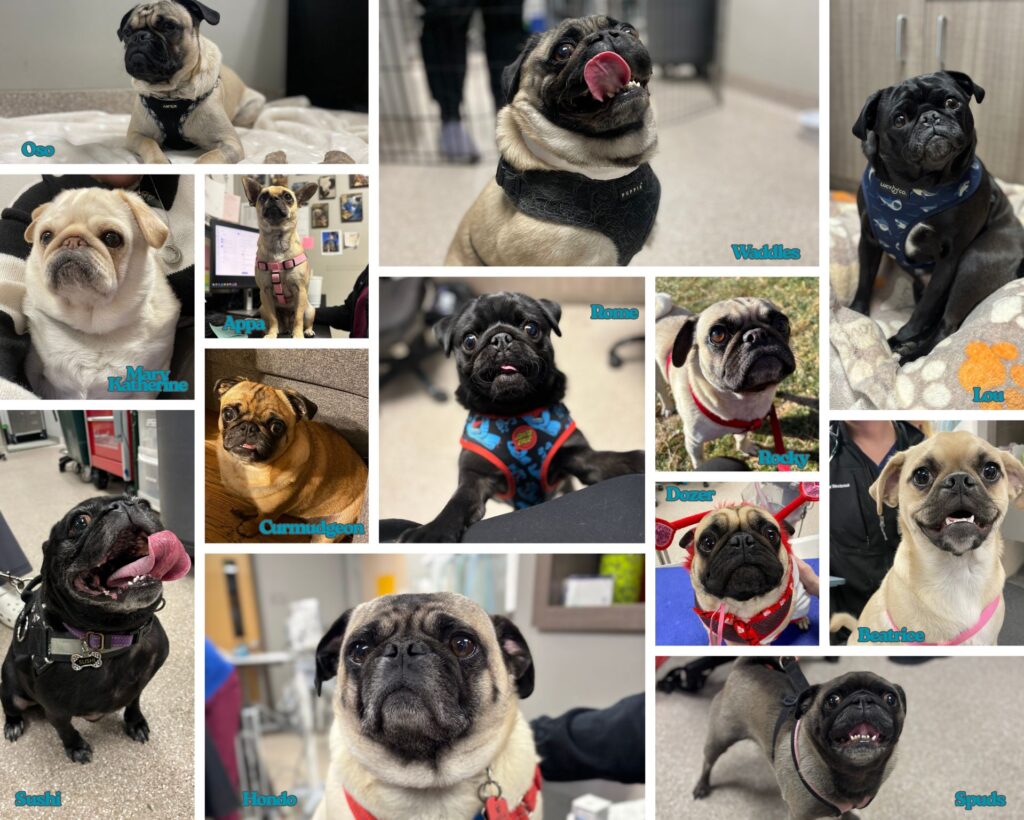
Early intervention in a disease with limited options
Necrotizing meningoencephalitis (also referred to as Pug Dog Encephalitis; PDE) is a rapidly progressive, fatal, immune-mediated condition that most commonly affects young Pugs between 1.5 and 2.5 years of age. This condition shares many similarities to an aggressive form of multiple sclerosis (MS) in humans.9, 10 ,11 Current treatment options for NME focus on managing symptoms with corticosteroids and immunosuppressive drugs, but survival times after diagnosis are typically short – on average, 6 to 7 months.12
The goal of the study was to evaluate the tolerability and therapeutic activity of allogeneic MSCs administered intravenously to dogs exhibiting early clinical signs and diagnostic findings consistent with NME. Researchers screened more than 250 pugs between 2021 and 2024, identifying 13 that met eligibility criteria based on neurological examination abnormalities, MRI findings, and cerebrospinal fluid (CSF) analysis.
Common abnormal neurological signs included spinal hyperesthesia (85%), paw placement deficits (85%), menace deficits (69%), obtundation (69%), and seizures (54%). These clinical signs mimic the earliest symptoms of MS. All dogs underwent at least three neurological exams prior to MSC treatment to confirm consistency or progression of signs.
Safety
The MSCs were administered intravenously via slow injection over 30 minutes. The majority of dogs received two doses of MSCs, but some received as many as four doses if they showed signs of relapse. No serious adverse events were reported. Mild adverse reactions were observed following dosing in three dogs (representing 10% of all treatment administrations), including one episode of nausea, one episode of vomiting, and one episode of urticaria; all resolved with supportive care.
Short-term improvements across all patients
All 13 dogs showed measurable improvement in neurological signs within 24 hours of the first MSC dose, with a mean neurological exam score improvement of 86%.
Longer-term responses and remission rates
At publication, all 13 dogs were in remission, with follow-up ranging from 5 to 43 months. Just over half (7/13) remained in remission following MSC therapy alone. The remaining six required adjunctive immunosuppressive therapy (cytarabine and prednisone) after relapse and are currently in remission.
Serial MRIs showed improvement or resolution of inflammatory lesions in most dogs, and CSF parameters remained stable or improved in 75% of patients.
What this means for clinical practice
While the study was limited by its small sample size and lack of blinding, the results suggest that early-stage intervention with MSCs may offer a promising avenue for modifying disease progression in dogs with neuroinflammatory disease.
The study also introduces a possible role for IV-administered MSCs as a less invasive option for CNS-targeted immunomodulation. According to the authors, intravenous administration was effective in producing rapid clinical improvement and may offer a more accessible route for future applications.
Further research is needed to clarify the mechanism of action, determine optimal dosing intervals, and evaluate long-term efficacy in a larger group of dogs.
Looking ahead
The findings of this study contribute to growing interest in regenerative therapies for immune-mediated conditions in veterinary neurology. The authors suggest that dogs with naturally occurring NME could also serve as a relevant translational model for human neuroinflammatory conditions such as multiple sclerosis. Larger, controlled clinical trials are needed to confirm the findings, explore biomarkers for treatment response, and refine patient selection. In the meantime, the study highlights the importance of early screening and diagnosis in breeds at risk for NME – and the potential for ready-to-use, allogeneic stem cell therapies to shift the treatment paradigm from symptom control toward disease modification.
References
- Gao F, Chiu S, Motan D, et al. Mesenchymal stem cells and immunomodulation: current status and future prospects. Cell Death Dis. 2016;7(1):e2062. doi:10.1038/cddis.2015.327
- Kol A, Foutouhi S, Walker NJ, Kong NT, Weimer BC, Borjesson DL. Gastrointestinal microbes interact with canine adipose-derived mesenchymal stem cells in vitro and enhance immunomodulatory functions. Stem Cells Dev. 2014;23(16):1831-1843. doi:10.1089/scd.2014.0128
- Chung DJ, Hayashi K, Toupadakis CA, Wong A, Yellowley CE. Osteogenic proliferation and differentiation of canine bone marrow and adipose tissue derived mesenchymal stromal cells and the influence of hypoxia. Res Vet Sci. 2012;92(1):66-75. doi:10.1016/j.rvsc.2010.10.012
- Black L, Zacharias S, Hughes M, Bautista R, Taechangam N, Sand T. The effect of uterine-derived mesenchymal stromal cells for the treatment of canine atopic dermatitis: a pilot study. Front Vet Sci. 2022;9:1011174. doi:10.3389/fvets.2022.1011174
- Gugjoo MB, Amarpal A, Sharma GT. Mesenchymal stem cell basic research and applications in dog medicine. J Cell Physiol. 2019;234(10):16779-16811. doi:10.1002/jcp.28348
- Zeira O, Asiag N, Aralla M, et al. Adult autologous mesenchymal stem cells for the treatment of suspected non-infectious inflammatory diseases of the canine central nervous system: safety, feasibility and preliminary clinical findings. J Neuroinflammation. 2015;12(1):181. doi:10.1186/s12974-015-0402-9
- Windsor RC, Stewart S, Cassano JM, et al. Intravenous allogeneic mesenchymal stromal cell therapy in 13 Pugs with presumptive early necrotizing meningoencephalitis. J Am Vet Med Assoc. Published online August 1, 2025. doi:10.2460/javma.25.05.0354
- Gallant Staff. Ethos Discovery and Gallant Therapeutics Collaborate on Study Evaluating Gallant’s Stem Cell Therapy in Pugs with Necrotizing Meningoencephalitis (NME), also referred to as Pug Dog Encephalitis (PDE). Gallant. Published October 3, 2023. https://www.gallant.com/news/ethos-discovery-and-gallant-therapeutics-collaborate-on-nme-study/
- Siddiqui N, Sharma R, Bell D, et al. Marburg variant of multiple sclerosis. Reference article. Radiopaedia.org. doi:10.53347/rID-12276
- Baecher-Allan C, Kaskow BJ, Weiner HL. Multiple sclerosis: mechanisms and immunotherapy. Neuron. 2018;97(4):742-768. doi:10.1016/j.neuron.2018.01.021
- Smith JA, Nicaise AM, Ionescu RB, Hamel R, Peruzzotti-Jametti L, Pluchino S. Stem cell therapies for progressive multiple sclerosis. Front Cell Dev Biol. 2021;9:696434. doi:10.3389/fcell.2021.696434
- Levine JM, Fosgate GT, Porter B, Schatzberg SJ, Greer K. Epidemiology of necrotizing meningoencephalitis in Pug dogs. J Vet Intern Med. 2008;22(4):961-968. doi:10.1111/j.1939-1676.2008.0137.x