Mesenchymal Stromal Cell (MSC) Therapy for Canine Osteoarthritis
Gallant Pilot Trial Results
Key Takeaways
- Repeat dosing of intravenous uterine-derived MSCs was well tolerated
- Statistically significant improvement in mobility and quality of life using validated owner outcomes
- Positive efficacy outcomes with 3-month minimum duration of activity for control of clinical signs
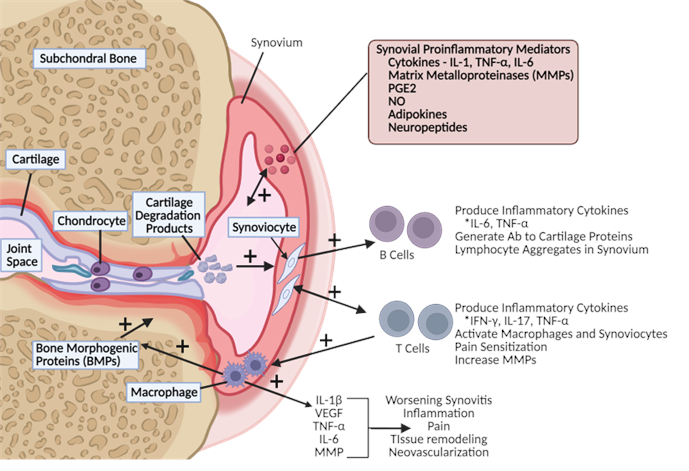
Osteoarthritis (OA) is a common and often underdiagnosed condition in dogs. OA affects more than 20% of dogs over 1 year of age in the US, 40% of dogs 4 years of age, and up to 80% of dogs over 8 years of age.1–3 In contrast to the misconception that OA is simply a “wear and tear” disease, it is now well established that pro-inflammatory cytokines and mediators play an important role in the onset and progression of this disease.4 Cartilage homeostasis is disturbed, chondrocytes become “activated,” and produce inflammatory mediators, while the limited repair capacity of cartilage means joint degeneration is progressive.4
Study Design
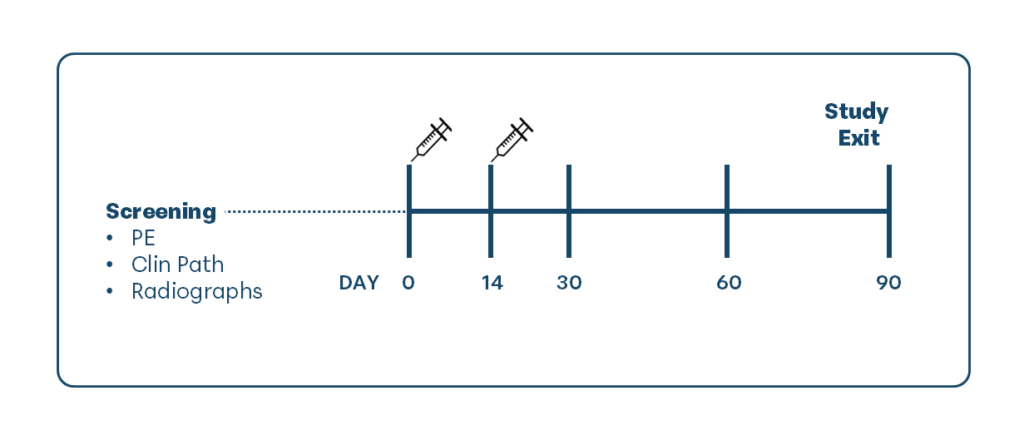
This randomized, masked, placebo-controlled clinical field study enrolled 88 client-owned dogs with radiographically confirmed osteoarthritis and observable lameness or pain in at least one arthritic peripheral joint (no spinal OA). Dogs were randomly assigned to receive 2 intravenous injections, administered 14 days apart, of either 1) 20 million allogeneic uterine-derived mesenchymal stromal cells (UMSCs) or 2) saline placebo.
Outcome assessments:
Dogs were evaluated at Day 14 (before the second dose), 30, 60 and 90 using both caregiver-reported and veterinarian-assessed outcomes. Day 90 was the primary outcomes for efficacy.
Caregiver assessments:
- Liverpool OsteoArthritis in Dogs (LOAD): validated caregiver questionnaire evaluating mobility and quality of life on a weighted scale.
- Client-Specific Outcome Measures (CSOM): calculated by caregiver’s determination of three specific, unique activities for their dog that had become impaired since the onset of OA, evaluating each on a 5-point scale (0 = no problem, 1 = mildly problematic, 2 = moderately problematic, 3 = severely problematic, 4 = impossible) for a maximum possible total score of 12.
- Canine Brief Pain Inventory (CBPI): Caregiver assessed pain severity and pain interference scoring system.
- Owner Overall Assessment (OOA): Caregiver evaluated their dog’s overall response to treatment using a categorical scale (greatly improved, mildly improved, no change, or worsened).
Veterinarian Assessments:
- Veterinary Pain Assessment (VPA): veterinarian palpated at least one pre-identified affected appendicular joint and graded pain on a 1 to 5 scale.
- Veterinarian Overall Assessment (VOA): veterinarian assessment using a four-point categorical scale: excellent (clinical signs of OA eliminated or reduced to an inconsequential level), good (clinical signs substantially [at least 50%] reduced), fair (clinical signs minimally [less than 50%] reduced), or poor (clinical signs unaffected by therapy).
Statistics
Analysis was a Generalized Linear Model (GLIMMIX) with repeated measures. Statistical significance was set at p<0.05. All dogs that received at least one dose of treatment were included in the safety analysis. The efficacy analysis was based on dogs that were considered evaluable per the study protocol that did not have significant deviation that were likely to impact efficacy. Evaluability was assessed at each time point and for each dog.
Efficacy Results:
Day 90 was the primary effectiveness endpoint. At Day 90, there was statistical significance for LOAD (73.7% UMSCs vs 30.8% saline; p=0.0265) and CSOM (69.2% UMSCs vs 25.0% saline; p=0.0140) in a population of dogs with mild or moderate OA, weighing less than 75 lbs. At Day 60, LOAD, CSOM and OOA were also significantly improved. Improvement in LOAD and CSOM was evident as early as Day 30 (first efficacy timepoint). Other categorical variables for both the owner and veterinarian consistently showed greater improvement in the UMSC-treated dogs compared to saline including CBPI, OOA, VOA and VPA.
Safety Results
No treatment-related serious adverse events (SAEs) were observed. Non-serious adverse events were observed in 25 control dogs (69.4%) and 28 UMSC dogs (53.8%) during the 90-day study of which 6.5% (n=4) were considered to be treatment related. Within 24 hours of treatment, 10 control dogs (27.8%) and 10 UMSC dogs (19.2%) had a reported AE. The most common AEs reported in both groups was vomiting (UMSC n=3, control n=2) and lethargy (UMSC n=1, control n=2). Routine laboratory testing including complete blood counts, serum biochemistry, and urinalysis did not show clinically significant abnormalities associated with therapy.
Conclusions
The results from this study support the efficacy and safety of intravenous (i.e., systemic) UMSC therapy for improvement in mobility, pain, and quality of life in dogs with osteoarthritis for at least three months following treatment and inform next steps toward FDA conditional approval. Additional studies are ongoing to further evaluate UMSCs for canine OA.
References
- Johnston SA. Osteoarthritis. Vet Clin North Am Small Anim Pract. 1997;27(4):699–723. doi:10.1016/S0195-5616(97)50076-3
- Anderson KL, O’Neill DG, Brodbelt DC, et al. Prevalence, duration and risk factors for appendicular osteoarthritis in a UK dog population under primary veterinary care. Sci Rep. 2018;8(1):5641. doi:10.1038/s41598-018-23940-z
- Enomoto M, De Castro N, Hash J, et al. Prevalence of radiographic appendicular osteoarthritis and associated clinical signs in young dogs. Sci Rep. 2024;14(1):2827. doi:10.1038/s41598-024-52324-9
- Brondeel C, Pauwelyn G, de Bakker E, Saunders J, Samoy Y, Spaas JH. Mesenchymal Stem Cell Therapy in Canine Osteoarthritis Research. Front Vet Sci. 2021;8:668881. doi:10.3389/fvets.2021.668881

Vice President of Veterinary Affairs at Gallant
Dr. Rebecca Windsor, DVM, DACVIM, is a board-certified veterinary neurologist with over 20 years of clinical experience and a strong record of scientific publication. She joined Gallant in 2025 and serves as Vice President of Veterinary Affairs.
Dr. Windsor specializes in veterinary regenerative medicine, with a focus on advancing FDA-approved, off-the-shelf mesenchymal stem cell therapies for pets. She develops educational platforms that translate the science, safety, and clinical efficacy of stem cell therapy for veterinary professionals. Since 2019, she has served as a Clinician Scientist at Ethos Discovery, where she leads the neurology research portfolio.