What to Do If a Cat Swallowed a String
Cats have a natural attraction to threads, yarn, and ribbons (what vets call “linear foreign bodies”) because the movement mimics prey, especially snakes. That hunting instinct explains why cats love pouncing on moving threads.
But what happens when your playful cat swallows a string instead of just chasing it? Is string dangerous for cats? Absolutely. Here’s a detailed guide to what to do in the first two hours after your cat swallows string, yarn, or thread.
Why String Digestion Is Dangerous for Cats
Swallowing a string isn’t like eating a toy mouse or nibbling kibble. Strings behave differently in the digestive system:
- They can anchor around the tongue or stomach and pull tightly.
- The intestines try to move the string forward, but can’t, causing them to bunch up like an accordion.
- Over time, the string can cut into the intestinal wall, leading to internal bleeding, peritonitis, or sepsis.
This is why string ingestion in cats is always considered a veterinary emergency, even if your cat looks fine right after it happens.
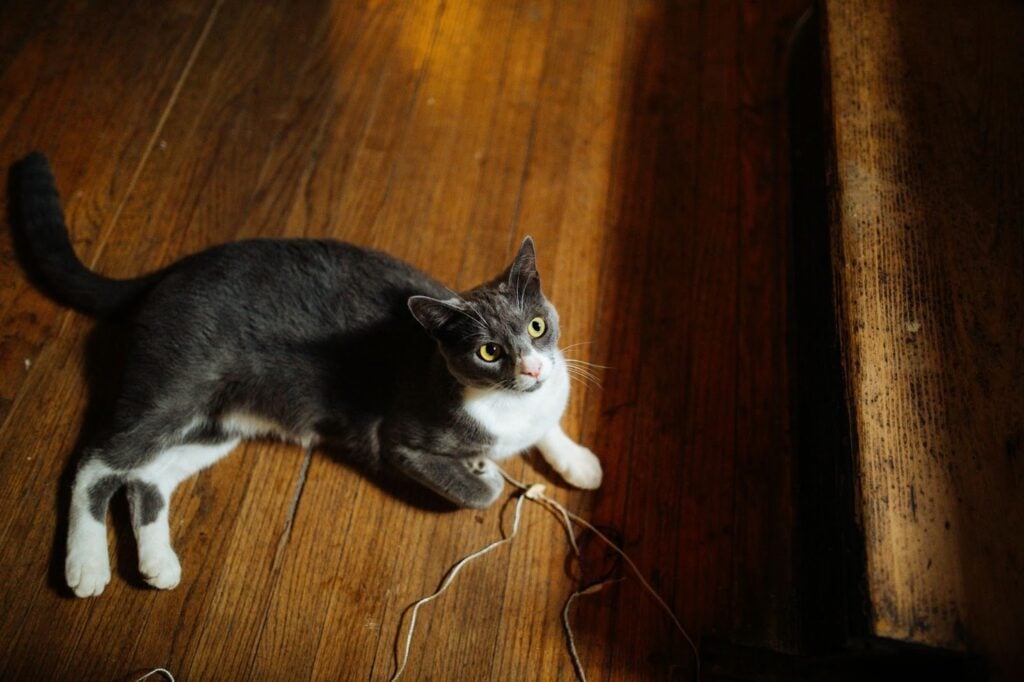
0–30 Minutes: Call the Vet Immediately
The very first step is to call your veterinarian. Don’t wait and see.
- Whether it’s string, ribbon, dental floss, yarn, or fishing line, these are all considered dangerous.
- If your regular clinic is closed, find the nearest 24-hour emergency vet hospital.
- If you suspect your cat ate a string—even if you didn’t witness it—call for guidance.
Veterinarians stress that even small amounts of string can be life-threatening. Googling “Is string poisonous to cats?” won’t help—it’s not the material that’s toxic, it’s the physical blockage and damage string can cause.
30–60 Minutes: Monitor for Symptoms
Not every cat will show symptoms right away, but in the first hour, keep an eye out for:
- Excessive drooling
- Vomiting or retching
- Pawing at the mouth
- Restlessness or hiding
- Signs of pain (crying, hunched posture, refusing food)
Check your cat’s mouth and throat. Sometimes, the string becomes caught under the tongue or at the back of the throat.
If you see a string hanging from your cat’s mouth or anus, do not pull on it. Pulling may damage internal organs. The only exception is if the string slides out of the mouth with absolutely no resistance; in that case, you can remove it gently. Otherwise, leave it for the vet.
1–2 Hours: Prepare for the Vet Visit
If you’re headed to the clinic, here’s what you can expect:
- Physical exam: Your vet will check the mouth, throat, and abdomen for signs of foreign material.
- Imaging: X-rays or ultrasounds may reveal abnormal gas patterns or objects in the stomach.
- Bloodwork: Helps assess hydration and organ function.
- Endoscopy: In some cases, vets can retrieve the string with a scope before it passes into the intestines.
- Surgery: If the string is already lodged and causing an obstruction, surgery is often necessary to remove it.
Some pet parents wonder if they can induce vomiting in their cat after it has eaten a string. The answer is almost always “No!” Inducing vomiting at home is risky and may cause more harm than good. Let your vet decide if it’s safe.
What If My Cat Ate a String Days Ago?
Sometimes, pet owners don’t realize their cat ate a string until later. You may notice:
- Ongoing vomiting or diarrhea
- Loss of appetite
- Weight loss
- Hiding or lethargy
- String protruding from the mouth or anus
If your cat shows any of these signs, see a vet immediately. Silent damage may already be occurring inside the intestines.
How to Prevent Your Cat from Eating a String
The best way to protect your cat from string-related emergencies is to prevent them. Cats are naturally drawn to string, ribbon, floss, and similar objects, so it’s important to reduce their access.
Avoid toys with loose threads or yarn that can fray during play. Keep sewing supplies, holiday ribbons, and dental floss stored securely where curious paws can’t reach. If your cat plays with toys that have strings or dangling parts, always supervise the session to make sure nothing is swallowed. Safer alternatives, such as sturdy wand toys, laser pointers, or puzzle feeders, can satisfy your cat’s hunting instincts without the risk of accidental ingestion.
A Step Forward in Veterinary Care
Get the latest news on stem cell research, clinical trials, and the future of pet care.