How Often Do Puppies Need to See the Vet?
Puppies need to visit the veterinarian more frequently than adult dogs, especially during their first year of life. That’s because puppies—generally defined as dogs under 12 months of age—are growing rapidly and have developing immune systems that require frequent health checks, vaccinations, and parasite prevention.
If you’re welcoming a new puppy into your home, understanding the recommended puppy vet visit schedule will help you stay ahead of potential issues and build healthy habits that last a lifetime.
Visit #1: Around 8–10 Weeks Old
When puppies are first born, they receive protective antibodies from their mother’s milk. These antibodies provide short-term immunity, but they gradually wear off by 6 to 8 weeks of age, when veterinary care becomes essential.
At this first appointment, your veterinarian will:
- Perform a comprehensive physical exam to check weight, heart, lungs, eyes, and joints
- Screen for parasites (such as worms)
- Review or begin the first round of core puppy vaccines:
- Distemper
- Parvovirus
- Adenovirus (hepatitis)
If you adopted your puppy around 8 weeks old, ask for vaccination and deworming records from the breeder, shelter, or rescue. Bring all paperwork to your first veterinary visit.
At your puppy`s first vet visit, expect a physical exam, first vaccinations, a discussion of deworming, diet recommendations, and a baseline health plan.
It’s best to schedule this appointment within the first few days of bringing your puppy home to confirm that your new pet is healthy and developing normally.
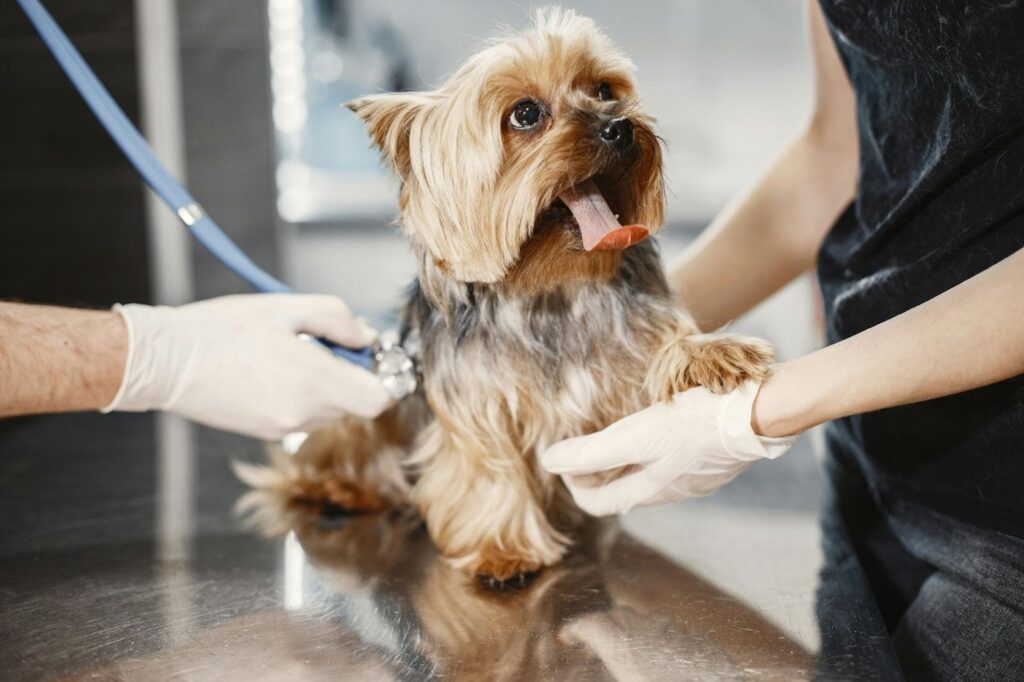
Visit #2: Around 12–14 Weeks Old
Your puppy’s second vet visit typically occurs two to four weeks after the first. This visit includes booster doses of the same core vaccines:
- Distemper
- Parvovirus
- Hepatitis (adenovirus)
Your veterinarian may also:
- Recheck your puppy’s growth and body condition
- Address any new issues like teething pain, mild digestive changes, or early behavior training
- Discuss parasite prevention (heartworm, flea, and tick control)
- Begin planning for spay or neuter surgery
Most veterinarians recommend spaying or neutering between 8 weeks and 8 months of age, depending on breed and health status. Early spaying/neutering can help prevent certain reproductive diseases and behavioral issues later in life.
Visit #3: Around 16–18 Weeks Old
By 16 weeks, your puppy’s immune system is ready for the final round of core vaccine boosters and additional important immunizations.
At this visit, your veterinarian will typically administer:
- The final doses of Distemper, Parvovirus, and Hepatitis vaccines
- The first Rabies vaccine—required by law in all 50 states
Depending on where you live and your puppy’s lifestyle, your vet may also recommend optional vaccines, such as:
- Bordetella (kennel cough), required by most boarding facilities
- Leptospirosis, for dogs in high-risk areas
- Lyme disease, especially for dogs in wooded or tick-heavy regions
This is also a good time to discuss:
- Nutrition—choosing a balanced puppy diet appropriate for breed and size
- Exercise and play routines
- Dental care, brushing techniques, and teething management
- Ongoing parasite prevention, including monthly heartworm and flea/tick medication
Visit #4: Around 6–12 Months Old
Once the initial vaccination series is complete, your puppy should return to the vet for a final first-year wellness visit. This appointment helps ensure your dog is on track for a healthy adult life.
Your veterinarian will likely:
- Perform a full physical exam
- Review growth milestones and nutrition
- Check for retained baby teeth or emerging dental issues
- Update any booster vaccines due at this age
- Review behavior and training progress
- Continue year-round heartworm, flea, and tick prevention
If your dog has already been spayed or neutered, your veterinarian may review their recovery and overall hormone balance. If the procedure hasn’t been done yet, now is an excellent time to finalize that plan.
Visits #5–#8: As Needed
Most healthy puppies will have three to four vet visits in their first year. However, additional appointments may be needed if your puppy experiences:
- Parasites (worms, fleas, or mites)
- Digestive issues or poor appetite
- Injuries from rough play or accidents
- Allergic reactions or skin irritation
- Post-surgery follow-ups
Puppies are naturally curious and may chew, swallow, or get into things they shouldn’t. Emergency visits for foreign body ingestion, vomiting, or diarrhea are not uncommon in the first year.
The more your puppy interacts with other dogs, the higher the chance they’ll pick up mild infections or parasites early on. Regular veterinary visits help catch problems early, support proper immune development, and ensure long-term wellness.
Setting Up a Long-Term Veterinary Care Routine For Your Dog
By the time your dog reaches one year old, you’ll transition to a regular adult wellness schedule, typically consisting of 1 or 2 visits per year. These exams include booster vaccines, lab work, and overall health assessments.
Staying consistent with veterinary care builds a strong foundation for lifelong health and helps your vet track your dog’s growth, temperament, and medical history from the very beginning.
A Step Forward in Veterinary Care
Get the latest news on stem cell research, clinical trials, and the future of pet care.